

LGBTQIA+ Therapy
Therapy for navigating identity, relationships, coming out, family dynamics, and the parts of yourself you’re still making sense of.
Online in North Carolina and South Carolina
Aetna and BCBS accepted

Mina Rasti, LCMHC

You’re used to reading the room before deciding how much of yourself is safe to show.
Rejection can hit especially hard, even when part of you knows you’ll be okay.
People-pleasing or overexplaining has become a way to avoid conflict or losing connection.
Getting close to someone can bring up both excitement and the urge to protect yourself.
Family, culture, religion, or past relationships may have taught you that parts of you were “too much,” wrong, or better kept quiet.
Sometimes it’s hard to tell what’s you and what’s a response to everything you’ve had to navigate.
When Being Yourself Hasn’t Always Felt Simple

How Can LGBTQIA+ Therapy Help?
-
Make space to sort through identity, expectations, and the parts of yourself that may have been shaped by other people’s opinions, without feeling like you have to rush toward a label or have everything figured out.
-
Explore the impact of criticism, exclusion, family dynamics, religion, culture, or past relationships that may still affect how you see yourself and what you expect from other people.
-
Look at how fears of rejection, people-pleasing, pulling away, or difficulty trusting can show up in relationships and begin finding ways to feel more secure without losing yourself.
-
Work toward feeling less guarded and more comfortable being honest about who you are, what matters to you, and what you want your relationships and life to look like.
You do not have to keep holding this by yourself.
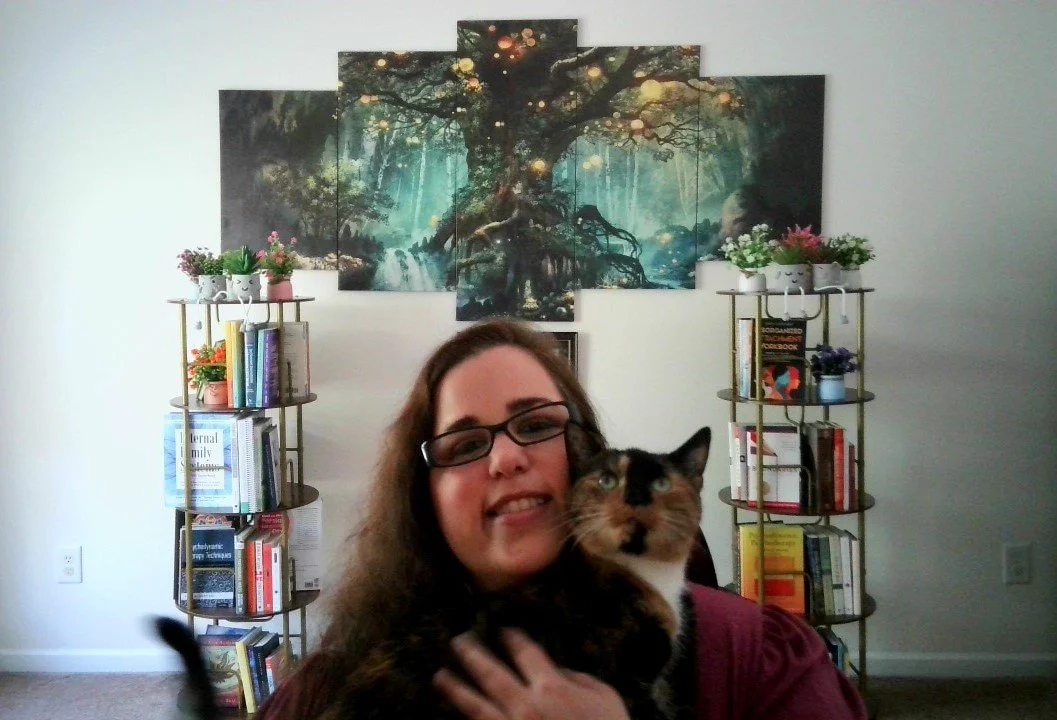
Hi, I’m Mina.
You shouldn’t have to spend half of therapy explaining basic parts of your identity before you can even get to the reason you came in. I want our work to feel like a place where we can move past that part and focus on what is actually happening in your life.
That might mean dating, family tension, identity questions, relationship anxiety, old hurt, or trying to figure out what you want when other people’s expectations have been loud for a long time. Sometimes being LGBTQIA+ is directly connected to what brings you to therapy and sometimes it is simply one part of who you are while we work on something completely different.
My style is warm, conversational, and pretty human in session. I’ll ask questions, help you look at things from different angles, and be honest with you when I think something is worth exploring a little more. There is room for the complicated conversations, the awkward ones, the frustrating ones, and the moments where we can laugh too.
Most importantly, you don’t have to make yourself easier to understand in therapy with me.
LGBTQIA+ Therapy FAQs
-
That’s completely okay. Your identity can be part of the picture without needing to be the focus of every session. We can work on anxiety, relationships, trauma, family stress, self-esteem, or whatever is bringing you in, while still making space for the parts of your identity that matter.
-
You don’t need to have the perfect label or a clear answer before starting therapy. There’s room for uncertainty, exploration, changes over time, and figuring out what feels right for you.
-
Yes. My practice is fully virtual, and I work with adults throughout North Carolina and South Carolina.
-
Yes. I’m in-network with Aetna and Blue Cross Blue Shield, and I also offer a self-pay option of $150 per session.
Ready for a Space That Feels More Like Yours?
You deserve therapy where your identity is understood without becoming the only thing we talk about.
Let’s talk about what’s bringing you in and what you’d like to feel different.